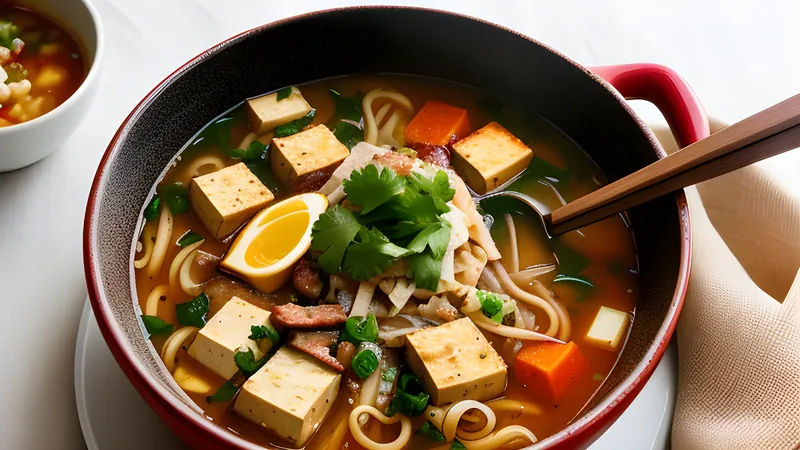
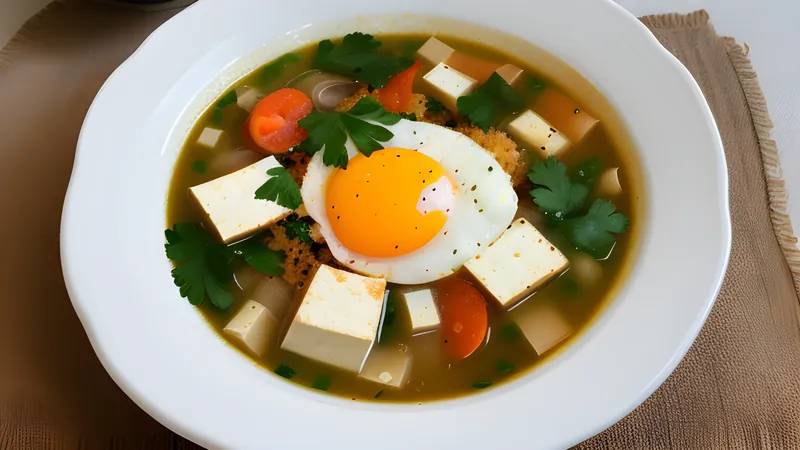
Kimchi Jjigae with Pork and Tofu
The Korean stew that makes a virtue of kimchi gone too sour to eat raw
Contents
↓ Jump to recipeKimchi jjigae is the dish that answers the question every Korean kitchen eventually faces: what do you do with kimchi that has fermented past the point of pleasant raw eating? Kept for weeks or months, kimchi keeps souring as the lactic acid bacteria do their work, until it’s too sharp and funky to enjoy straight from the jar. Rather than throw it out, Korean home cooks turn it into a bubbling, crimson stew where that very sourness becomes the point. Old kimchi is not a compromise here; it’s the preferred ingredient, and many cooks deliberately age a jar specifically to make this.
The stew is a weeknight staple across Korea, cooked in minutes from storecupboard fundamentals: kimchi, a bit of fatty pork, tofu, and the fermented chilli and soybean pastes that anchor so much Korean cooking. What separates a memorable version from a merely fine one is a small step most quick recipes skip, and a decent stock underneath. Get those right and you have a deeply savoury, tangy, warming bowl that costs very little and comes together in well under an hour.
Kimchi Jjigae with Pork and Tofu
Per serving (1 of 3 servings), estimated from the ingredients. Actual values vary with brands and portions.
The first quantity on each line is scaled. Check amounts mentioned inside a line, and cooking times.
Ingredients
- 300 g fatty pork belly or shoulder, sliced 5 mm thick
- 350 g well-fermented (sour) napa cabbage kimchi, roughly chopped
- 4 tbsp kimchi brine from the jar
- 1 tbsp neutral oil
- 1 onion, sliced
- 3 garlic cloves, minced
- 1 tbsp gochugaru (Korean chilli flakes)
- 1 tbsp gochujang
- 1 tsp sugar
- 1 tsp toasted sesame oil
- 700 ml anchovy-kelp stock (see method) or water
- 1 x 300 g block firm tofu, sliced 1.5 cm thick
- 2 spring onions, sliced on the diagonal
- For the stock: 8 dried anchovies, heads and guts removed; 1 piece dried kelp (kombu), 10 cm; 800 ml water
Method
- Make the stock: put the dried anchovies, kelp and 800 ml water in a pan. Bring almost to the boil, remove the kelp, then simmer the anchovies for 10 minutes. Strain and set aside. (Skip this and use plain water at a pinch.)
- Heat the oil in a heavy pot over a medium-high heat. Add the pork and fry for 5-6 minutes until it has rendered some fat and started to colour at the edges.
- Add the onion and garlic and cook for 2 minutes. Add the chopped kimchi and fry with the pork for 5 minutes, stirring, so it softens and takes on the pork fat. This frying step deepens the flavour and is worth not rushing.
- Stir in the gochugaru, gochujang and sugar and cook for 1 minute until the fat turns red and glossy.
- Pour in the kimchi brine and the stock. Bring to the boil, then reduce to a steady simmer and cook, partly covered, for 20 minutes, until the kimchi is fully soft and the broth is a deep red.
- Lay the tofu slices into the stew and simmer gently for a further 5 minutes, spooning broth over them, until heated through.
- Stir in the sesame oil, scatter with spring onions and serve bubbling hot with a bowl of steamed short-grain rice.
Why sour kimchi is the whole point
Fresh kimchi is crisp, bright and lightly sour, lovely as a side dish. As it ages in the fridge, the fermentation continues and the acidity climbs, the cabbage softens, and the flavour turns funkier and more complex. Past a certain point it’s too sharp to eat as a banchan, and that’s exactly when it earns the name mugeun-ji, aged kimchi, and becomes ideal for cooking. The long fermentation has broken down the cabbage and built up layers of sour, savoury depth that give the stew its character.
If your kimchi is still young and crunchy, the stew will taste flat and one-dimensional, lacking the tang that defines it. You can help it along by leaving the jar out at room temperature for a day or two to accelerate the souring, or by adding a splash of extra brine and a little rice vinegar to the pot. Better still, plan ahead: when you buy or make kimchi, set a portion aside at the back of the fridge to age for a few weeks with jjigae in mind. Napa cabbage kimchi (baechu) is the standard; radish kimchi works too but gives a different, cleaner result.
The anchovy-kelp stock, the small step worth taking
Here is the twist that lifts the whole bowl, and it’s barely any work. Most rushed recipes use plain water, and the stew is fine that way. But ten minutes spent simmering a few dried anchovies and a piece of kelp gives you myeolchi yuksu, the everyday Korean stock, and it deepens the broth with a gentle, briny, savoury undertone that water simply can’t provide. The kelp brings glutamates and the anchovies bring inosinate, and the two together create a synergistic umami hit that makes the stew taste like it’s been cooked far longer than it has.
The technique matters. Pull the kelp out just before the water boils, because boiling kelp for too long releases a slippery, faintly bitter compound that clouds the stock. The anchovies can simmer on for ten minutes to give up their savour, then strain everything out. Dried anchovies and kelp keep for months in the cupboard, so it’s worth having them in. If you genuinely don’t have them, plain water is an acceptable fallback, though a spoonful of dashi powder or a light fish stock gets you closer to the real thing.
Frying the kimchi: don’t skip it
The step that most separates a rich kimchi jjigae from a thin, sour one is frying the kimchi with the pork before any liquid goes in. Softening the kimchi in the rendered pork fat, over a good five minutes, tames its raw edge and coaxes out a mellower, rounder, caramelised flavour. Skipping straight to adding water leaves the kimchi tasting harsh and the broth tasting one-note. This is the same logic behind browning meat for a Western stew: you’re building flavour through direct heat before the braise begins.
Fatty pork belly is the traditional and best choice, because it renders its fat into the pot and that fat carries and rounds the chilli and kimchi flavours. Pork shoulder works if you want a touch less richness. The gochugaru and gochujang go in after the kimchi has softened, cooked for a minute in the hot fat so the chilli blooms and turns the fat a glossy red; adding them straight to liquid gives a flatter colour and taste. A single teaspoon of sugar balances the sourness of the aged kimchi without making the stew sweet.
Tofu, and when to add it
Firm tofu is the classic partner, added near the end so it warms through and soaks up broth without breaking apart. Slice it into slabs about a centimetre and a half thick and lower them gently into the simmering stew, spooning the red broth over the top. Five minutes is enough; it only needs heating through and a chance to take on flavour. Add it too early and vigorous simmering will jostle it into crumbs. Some cooks prefer soft or silken tofu for a more custardy texture, in which case be even gentler and add it right at the end.
The broth level and simmer time are worth a note. Twenty minutes of steady simmering before the tofu goes in reduces the liquid a little and lets the kimchi collapse fully into softness. If the pot looks like it’s reducing too far, top it up with a splash more stock; you want a generous amount of broth, since this is a stew you eat with rice and much of the pleasure is spooning the spicy, sour liquid over the grains.
Serving, the Korean way
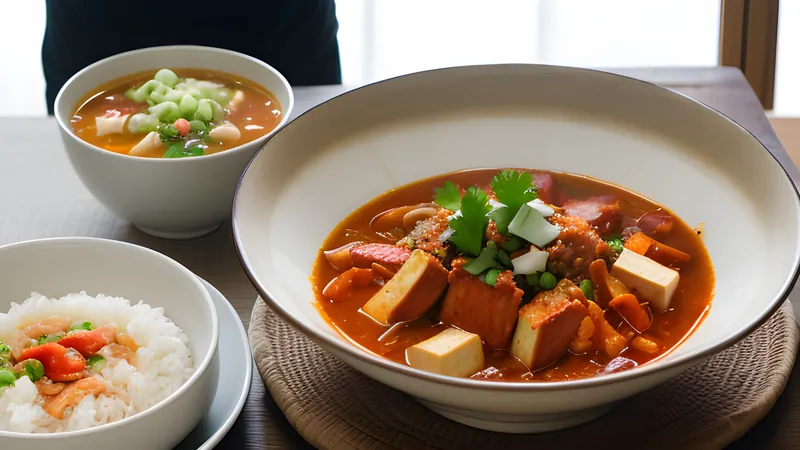
Kimchi jjigae is served bubbling hot, ideally still simmering in a stone pot brought straight to the table, with a bowl of plain steamed short-grain rice for each person. You eat it by spooning stew over rice, or by taking bites of rice between spoonfuls of the hot, spicy broth. A few more banchan on the side, even just some fresh kimchi and a plate of seasoned spinach, round it into a proper meal, though the stew and rice alone are plenty. Scatter sliced spring onion over the top just before serving for a fresh, sharp finish against the deep, cooked flavours below.

This stew belongs to a family of Korean fermented-paste stews, and its close cousin is milder and earthier. For the soybean-paste version, see Doenjang Jjigae: Korean Soybean-Paste Stew, which uses the same anchovy-kelp stock as its base. If it’s the long-simmered pork depth you’re after in a different form, the ramen tradition takes that idea to its extreme in Tonkotsu Ramen with a 12-Hour Pork Broth.
Kimchi jjigae and its army-base cousin
Kimchi jjigae belongs to a family of Korean stews built on a fermented base, and its best-known relative is budae-jjigae, the “army base stew”. That one dates to the years after the Korean War, when scarce food and surplus American canned meats such as ham and sausage met kimchi and gochujang in a single pot. Accounts of where it began vary: Uijeongbu, north of Seoul, is the most common claim, though other towns near US bases dispute it, and the founder stories attached to it are hard to verify. The shared logic is plain in both stews: sour, aged kimchi supplies the acidity and savoury depth, and whatever fat is to hand, pork here and processed meat there, rounds it out.
Storage and make-ahead
Kimchi jjigae is one of those stews that genuinely improves overnight, as the flavours settle and marry, so it’s an excellent make-ahead dish. Cook it fully, cool it, and keep it in the fridge for up to three days; reheat gently on the hob until bubbling. Many Korean cooks will tell you the second-day bowl is better than the first, and the pork fat and kimchi have had more time to meld into the broth.
If you’re planning to keep it, consider adding the tofu only to the portion you’re eating that day, since tofu can turn slightly spongy after a night in the acidic broth and a reheat. The base freezes acceptably for up to two months, though the texture of the kimchi softens further on thawing; add fresh tofu when you reheat. Because the whole dish is built around fermented, acidic ingredients, it’s forgiving and keeps well, which is fitting for a stew invented precisely to use things up.
Read next