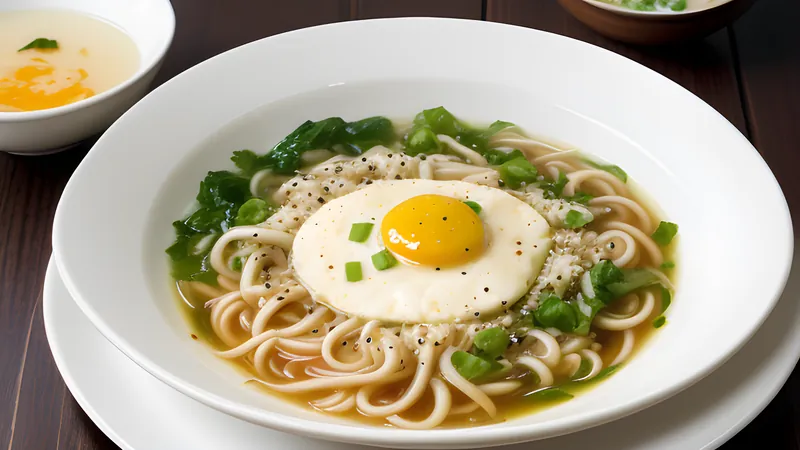
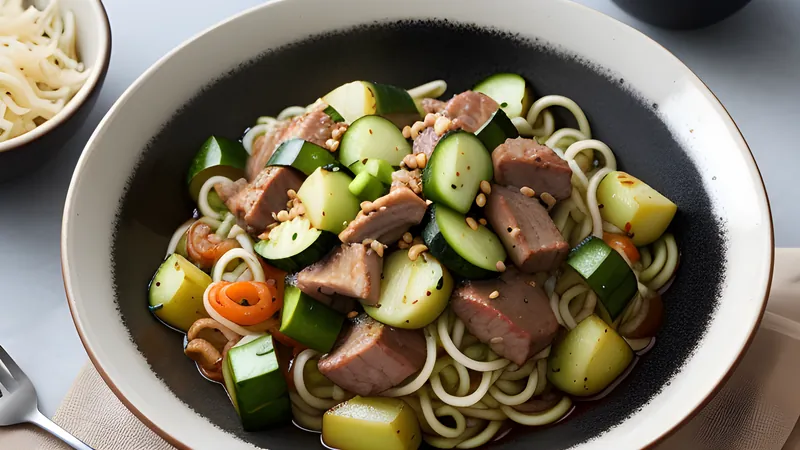
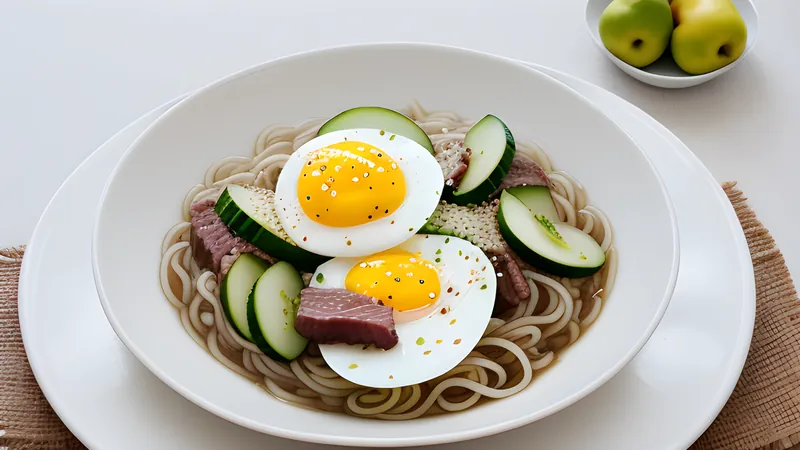
Korean temple-style bibim guksu with wild sesame
Cold mixed noodles built without garlic or onion, carried instead by toasted wild sesame and doenjang

Contents
↓ Jump to recipeBibim guksu is normally a fast, sharp thing: cold wheat noodles slicked in gochujang, garlic and vinegar, built for a hot afternoon when nobody wants the stove on longer than it takes to boil noodles. The temple version strips out the garlic, the onion and usually the chilli-heavy gochujang, and rebuilds the dish around a single ingredient most people outside Korea have never cooked with: deulkkae, wild sesame, known in English as perilla seed. What’s left is quieter and, once you’ve made it once, harder to stop reaching for.
Korean temple-style bibim guksu with wild sesame
The first quantity on each line is scaled. Check amounts mentioned inside a line, and cooking times.
Ingredients
- 200g somyeon (thin Korean wheat noodles)
- 3 tbsp deulkkae-garu (ground wild sesame / perilla seed powder)
- 2 tbsp doenjang (fermented soybean paste)
- 1 tbsp rice vinegar
- 1 tsp light soy sauce
- 1.5 tsp sugar
- 2 tbsp perilla oil, plus extra for finishing
- 3 tbsp cold vegetable or noodle-cooking water, to loosen
- 1 small Korean radish (mu) or 6cm daikon, julienned
- 0.5 cucumber, julienned
- 1 tsp gochugaru (Korean chilli flakes), optional
- 1 tbsp toasted sesame seeds
- A few perilla or shiso leaves, shredded, if you have them
Method
- Whisk the deulkkae-garu, doenjang, rice vinegar, soy sauce and sugar in a small bowl until smooth. Loosen with the perilla oil and enough cold water to make a pourable, nutty dressing.
- Salt the julienned radish lightly, leave for 10 minutes, then squeeze out the water it releases. This keeps the noodles from turning watery.
- Bring a large pot of unsalted water to a rolling boil. Cook the somyeon for 2-3 minutes until just tender, stirring so the strands don't clump.
- Drain and immediately rinse the noodles under cold running water, rubbing them gently between your hands to wash away surface starch until the water runs clear.
- Shake the noodles dry and divide between two bowls.
- Spoon the wild sesame dressing over the noodles and toss well with tongs or chopsticks until every strand is coated.
- Top with the drained radish, cucumber and shredded perilla leaves. Scatter with gochugaru if using, plus toasted sesame seeds.
- Finish with a final thread of perilla oil and serve at once, mixing again at the table before eating.
Temple food and the five forbidden vegetables
Korean Buddhist temple cuisine, sachal eumsik, runs on a rule that looks strange until you understand what it is protecting. Five pungent vegetables are excluded from temple kitchens: garlic, spring onion, chive, leek and a wild leek called dallae. The Mahayana Buddhist reasoning is that these ingredients are believed to inflame anger and desire when eaten raw, and to smell of them when cooked, so monastics avoid them to keep the mind calm for meditation. Meat and fish are also absent, following the precept against killing.
The practical effect on a plate is a cuisine built for depth without sharpness. Where a home kitchen reaches for garlic and onion as the automatic base of almost everything, temple cooks lean on fermentation, on wild greens gathered by season, and on nuts and seeds pressed for their oil. Doenjang, the fermented soybean paste that anchors so much everyday Korean cooking, becomes even more central here, doing quietly what garlic usually does loudly.
Jeong Kwan, the Buddhist nun whose temple cooking at Chunjinam Hermitage in Jangseong reached a wide audience through a Netflix documentary, has described the discipline as cooking that asks what a dish needs rather than what habit supplies. Bibim guksu without garlic is the same instinct applied to a dish most Koreans grew up eating built the fast, punchy way, arriving at a different dish that happens to wear the same name rather than a lesser version of the original.
Wild sesame, the ingredient doing all the work
Deulkkae, Perilla frutescens, is a plant in the mint family grown across Korea for both its leaves and its seed. The leaves, perilla or kkaennip, are the large, slightly furred, aniseed-scented leaves you find wrapped around barbecued meat or pickled in soy. The seed is a separate ingredient with its own identity: pressed, it gives deulgireum, wild sesame oil, a darker, grassier, more assertive cousin of ordinary toasted sesame oil. Ground, the toasted seed becomes deulkkae-garu, a pale, nutty powder that thickens sauces and stews the way ground nuts do in a Malaysian satay or Mexican mole, without any of the sweetness those comparisons might suggest.
What deulkkae-garu brings to a sauce that ordinary toasted sesame doesn’t is body. Ground sesame seeds are mostly oil and thin out when mixed with liquid. Ground perilla is starchier and holds a dressing together into something closer to a loose paste than a vinaigrette, so it clings to the noodles rather than pooling at the bottom of the bowl. It also carries a faint anise note underneath the nuttiness, which is what makes this dressing taste distinctly different from a straightforward sesame-doenjang mix.
You’ll find deulkkae-garu in Korean grocers, sometimes labelled wild sesame powder or perilla seed powder. If you can’t get hold of it, ground toasted sesame seeds mixed with a spoon of tahini gets you partway there, though the flavour will lean more straightforwardly nutty and less green.
Building the dressing without garlic
The trick to a garlic-free dressing that doesn’t taste like something is missing is to stack umami from more than one direction. Doenjang gives fermented depth. A touch of soy sauce adds salt and a different, cleaner savouriness. Rice vinegar supplies the acidity that cuts through the noodles’ starch, and a small amount of sugar rounds the sharp edges rather than making the dressing sweet.
Whisk these together first, before adding any oil or water, so the doenjang breaks down properly and doesn’t sit in stubborn lumps. Then loosen the mixture with perilla oil and enough cold water or reserved noodle water to bring it to a consistency that coats the back of a spoon and drips slowly rather than pours. Too thick and it clumps on the noodles instead of dressing them; too thin and it slides straight to the bottom of the bowl.
Taste as you go. Doenjang brands vary hugely in saltiness, and a paste that tastes right on its own can be overpowering once it’s diluted and tossed with a full bowl of noodles. It’s easier to add more than to rescue an oversalted batch.

Cooking and washing the noodles
Somyeon, the thin wheat noodles used here, cook fast, usually in two to three minutes, and go from perfect to gluey within about thirty seconds if you leave them in the pot. Set a timer and taste a strand a little before the packet time is up.
The cold-water rinse afterwards is not optional. Korean cold noodle dishes, naengmyeon and bibim guksu alike, depend on washing away the surface starch that boiling releases, both to stop the noodles cooking further in residual heat and to strip the slick, gluey coating that would otherwise dull the dressing’s flavour and stop it clinging properly. Rinse under running cold water while rubbing the strands gently between your palms, and keep going until the water runs clear rather than cloudy. It takes less than a minute and it’s the difference between noodles that taste clean and noodles that taste starchy.
Vegetables, and what to add if you want more
Radish and cucumber are the backbone here: crisp, watery, cooling contrasts to the dense, nutty dressing. Salting the radish briefly and squeezing it dry stops it weeping into the bowl and diluting everything. Beyond those two, temple cooking makes generous use of foraged and seasonal namul, wild greens that are blanched, seasoned lightly and folded through rice or noodle dishes. Blanched spinach, wild aster (chwinamul) if you can find it dried, or even a handful of shredded lettuce all sit comfortably here.
Shredded perilla leaves, if you have a separate bunch beyond the seed powder, tie the whole bowl together, doubling down on that green, aniseed note the seeds only hint at. A scattering of gochugaru is the closest this recipe comes to the original dish’s heat; leave it out entirely and the bowl is still balanced, just gentler.
Serving, storage and the case for eating it cold
Serve immediately once mixed. The dressing is built to coat noodles that are freshly rinsed and still slightly damp, and it separates and thickens unpleasantly if the bowl sits. If you want to prepare ahead, make the dressing and prep the vegetables separately, keep both chilled, and only cook, rinse and toss the noodles just before eating.
Leftovers don’t reheat: this is a dish that lives entirely in its cold, just-mixed state, closer in spirit to a noodle salad than to a bowl of soup. If you have dressing left over, it keeps for a few days in the fridge and works well spooned over blanched vegetables or steamed rice as a quick side.
What temple food asks you to notice
Cooking without garlic and onion sounds like a restriction until you actually do it, at which point it turns into an exercise in paying attention. Most home cooks build flavour on autopilot: chop an onion, mince some garlic, let them sweat, and everything downstream tastes fine because that base is doing the heavy lifting. Take it away and every other ingredient has to earn its place. The doenjang has to be good doenjang. The perilla oil has to be fresh, because old sesame and perilla oils turn rancid and flat rather than staying merely mild. The radish has to be crisp, not woolly, because there’s nothing loud enough in the bowl to cover for a poor one.
This is closer to how a lot of pre-industrial cooking worked everywhere, not just in Korean monasteries: fewer aromatics, more reliance on fermentation, salt and time to build flavour, and a sharper eye for the quality of what you started with. Temple food formalises that instinct into a discipline, but the underlying lesson travels. A bowl of noodles this plain in its ingredient list has nowhere to hide a poor one.
Variations worth trying
Once the dressing is second nature, it takes well to small additions that keep it inside the same quiet register. A few cubes of silken or lightly pressed firm tofu, added raw and cool, turn the bowl into something more substantial without introducing meat or the pungent five. Thinly sliced king oyster mushroom, pan-seared dry until it browns and then cooled, brings a savoury, almost meaty chew that plays well against the crisp radish.
For a more autumnal version, swap half the radish for julienned Korean pear or nashi pear, which adds a clean sweetness that plays surprisingly well against the fermented dressing, a pairing borrowed from how pear turns up in naengmyeon broths. If you want more green, a handful of blanched and squeezed spinach or the wild aster called chwinamul, sold dried in Korean grocers and rehydrated before use, folds in easily and pushes the dish further into proper temple-table territory.
Heat is the one lever you can pull freely without breaking the spirit of the dish, since chilli isn’t among the forbidden five. A spoon of gochugaru does the job here, but if you happen to have Korean chilli oil rather than flakes, a thread of that stirred through at the end adds warmth without the gritty texture flakes can leave behind.
Troubleshooting
If the dressing tastes flat rather than rounded, it’s almost always missing acid or salt rather than needing more deulkkae-garu. Add the rice vinegar in small increments and taste after each one; it should taste bright rather than sour. If it tastes chalky or dusty, the deulkkae-garu hasn’t had enough liquid worked into it. Whisk in the water a tablespoon at a time until the texture turns glossy rather than gritty.
If the noodles clump before you can dress them, it’s usually because they sat too long after draining before the cold rinse, letting the surface starch set. Move quickly from pot to colander to cold tap, and don’t let cooked noodles rest in their own steam.
What to serve alongside it
Bibim guksu made this way pairs naturally with other dishes that lean into fermentation and restraint rather than raw pungency, in the way doenjang jjigae carries a whole meal on soybean paste alone, or a spoon of gomae sesame spinach sits alongside rice as a side rather than a centrepiece. A bowl of plain steamed rice on the side is traditional and genuinely useful, since it gives you somewhere to rest between mouthfuls of a dressing this concentrated. Eaten together, these dishes show what Korean cooking looks like when it isn’t reaching for garlic and chilli by reflex, and how much flavour is still on the table when it doesn’t.
Read next