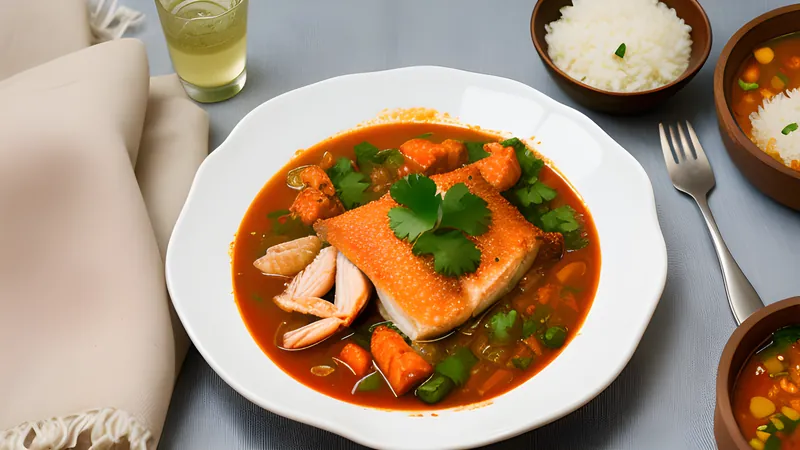
Liberian cassava leaf stew with smoked fish
Pounded cassava leaves simmered for hours with smoked fish, palm oil and hot pepper until they turn dark and silky

Contents
↓ Jump to recipeCassava leaf stew, known across Liberia simply as “cassava leaf” or by its Liberian English name “GB” in some households, is the dish that shows up at funerals, homecomings and any gathering large enough to need a pot that feeds a crowd from a handful of ingredients. It’s built on the leaves of the same plant that gives West Africa its cassava root and its fufu, pounded fine, cooked for hours until they lose all their bitterness, and carried by palm oil, smoked fish and enough scotch bonnet to make clear this is not a shy dish.
Liberian cassava leaf stew with smoked fish
Per serving (1 of 6 servings), estimated from the ingredients. Actual values vary with brands and portions.
The first quantity on each line is scaled. Check amounts mentioned inside a line, and cooking times.
Ingredients
- 500g frozen pounded cassava leaves, thawed (or 800g fresh cassava leaves, pounded)
- 300g smoked fish (mackerel, herring or bonga), skin and bones removed, flaked
- 200g smoked or dried shrimp, rinsed
- 300g beef shin or goat, cut into 3cm chunks
- 200ml red palm oil
- 1 large onion, chopped
- 1 red bell pepper, chopped
- 3-4 scotch bonnet chillies, whole (pierced once) or chopped, to taste
- 4 garlic cloves, minced
- 1 tbsp fresh ginger, grated
- 2 beef or fish stock cubes
- 800ml water, plus more as needed
- Salt, to taste
- Cooked white rice, to serve
Method
- Put the beef or goat in a large, heavy pot with 500ml water and a pinch of salt. Bring to a boil, skim any scum, then simmer covered for 45 minutes until nearly tender.
- Meanwhile, heat the red palm oil in a separate wide pan over medium heat until it loosens and turns fully liquid, about 2 minutes; do not let it smoke.
- Add the chopped onion and cook for 5 minutes until softened, then stir in the bell pepper, garlic and ginger and cook for a further 3 minutes.
- Add the whole or chopped scotch bonnets and the crumbled stock cubes and stir for a minute until fragrant.
- Tip the onion mixture into the pot with the beef. Add the pounded cassava leaves, breaking up any clumps, and stir to combine.
- Add the flaked smoked fish and the smoked shrimp, then pour in the remaining 300ml water so the leaves are just covered.
- Bring to a gentle simmer, cover, and cook for 1.5-2 hours, stirring every 20 minutes and topping up with a little water if it looks dry, until the leaves are dark, soft and glossy and the oil has separated slightly at the surface.
- Taste and adjust salt. Remove whole scotch bonnets before serving if you used them for background heat rather than to eat. Serve hot, ladled over white rice.
A leaf that has to be worked before it can be eaten
Raw cassava leaves contain cyanogenic glycosides, the same class of compound found at higher levels in the cassava root itself, which release small amounts of cyanide when the plant tissue is damaged. That’s exactly why every West and Central African tradition that cooks with them, from Liberia and Sierra Leone through to the Democratic Republic of Congo’s saka saka, treats the pounding and long cooking as non-negotiable steps rather than stylistic choices. Pounding breaks the leaf’s cell walls and releases the enzymes that neutralise the toxic compounds, and extended simmering, well past the point where a Western vegetable would be considered ruined, finishes the job and softens the leaf’s naturally tough, fibrous texture into something silky.

Fresh cassava leaves need pounding in a mortar or blitzing hard in a food processor with a splash of water until they reach a texture close to finely chopped spinach, then a thorough cook of at least ninety minutes. Frozen pre-pounded cassava leaves, sold in West African grocers and increasingly in wider Asian and international markets, have already done the labour-intensive pounding for you and just need thawing and the same long simmer. They’re a legitimate shortcut rather than a compromise; most Liberian households in the diaspora use them routinely, since sourcing and pounding fresh leaves outside West Africa is genuinely difficult.
Why the stew takes so long
Two hours or more on the stove looks excessive next to most leafy-green cooking, where the goal is to preserve brightness and bite. Cassava leaf stew wants the opposite. The long simmer drives off any lingering bitterness, breaks the leaves down until they lose their individual shape and merge into a dense, almost paste-like mass, and gives the palm oil, smoked fish and aromatics time to fully permeate rather than just coat the surface. A cassava leaf stew rushed to forty-five minutes tastes grassy and unfinished; the same pot at two and a half hours tastes rounded, dark and deeply savoury, with the smoky fish flavour worked all the way through rather than sitting on top.
Keep the heat gentle rather than a hard boil, which risks scorching the thick, reducing mixture onto the base of the pot, and stir regularly, checking the water level so it never runs dry. The finished stew should be thick enough to sit on rice rather than run off it, closer to a dense braise than a soup.
Palm oil, and why it isn’t optional
Red palm oil, pressed from the fruit of the oil palm rather than the kernel, is the fat that defines the flavour and colour of cassava leaf stew and of a huge swathe of West African cooking. It’s naturally deep red-orange from a high concentration of carotenoids, has a distinctive earthy, slightly nutty flavour with almost no resemblance to the refined, deodorised palm oil used in industrial food production, and doesn’t behave like a neutral cooking fat you could swap out without consequence.
Heat it gently until it loosens and turns liquid rather than letting it smoke, since it can taste acrid if scorched. Vegetable oil will get you a technically edible stew, but the colour and the specific earthy backbone of the dish come from the palm oil itself, so treat it as a defining ingredient rather than an interchangeable cooking medium. Buy unrefined, cold-pressed red palm oil from a West African or Caribbean grocer where possible; the mass-market refined version sold for frying elsewhere has been bleached and deodorised and won’t taste the same.
Smoked fish and the layered savouriness
Smoked fish is doing two jobs here: adding protein and adding a deep, dried, oceanic flavour that fresh fish can’t replicate. Bonga, a small West African herring-like fish, is the traditional choice and is sold smoked and whole in West African grocers, but any robust smoked fish, mackerel, herring or even smoked whiting, works well once flaked off the bone. Check carefully for small bones as you flake it; they’re easy to miss in a dark, well-seasoned stew.
Dried or smoked shrimp adds a second, more concentrated layer of savouriness underneath the fish, closer to how anchovy or fish sauce work in other cuisines, essential to the finished depth without ever being the headline ingredient. Rinse it briefly before adding to soften its edge and knock off any grit. Some households also add a piece of smoked or dried meat alongside the beef for a third layer of smokiness; if you want to try it, a small piece of smoked turkey wing or neck, added at the same point as the beef, is a common addition.
Heat, and managing it for your table
Scotch bonnet chilli is central to the dish’s character rather than a garnish you can quietly drop. Liberian cooking generally runs hot, and cassava leaf stew is one of the hotter staples. Adding the chillies whole and pierced once, rather than chopped, lets you pull them out before serving if you want the background heat and aroma without committing everyone at the table to the full burn; chop them in instead if you want that heat distributed evenly through every spoonful. Either way, wash your hands thoroughly after handling scotch bonnets and keep them away from your eyes.
A dish for feeding a lot of people
Part of why cassava leaf stew is the dish for funerals and homecomings rather than a quiet Tuesday dinner is arithmetic: a pot this size, built on a comparatively small quantity of leaves stretched with rice, meat and smoked fish, feeds far more people per pound of ingredients than a meat-forward stew would. Liberian gatherings, like much of West African hospitality, expect a pot large enough that anyone who turns up gets fed without a second thought, and cassava leaf, dense and filling over rice, does that job efficiently. Doubling or tripling this recipe for a genuine crowd is entirely normal; just make sure your pot is wide enough that the leaves cook evenly rather than steaming in a tall, narrow column.
Serving and what goes with it
Cassava leaf stew is eaten over plain white rice, which soaks up the oil and juices and gives the intensity of the stew somewhere to land. It sits in the same family as other West African leaf-and-palm-oil stews worth knowing, including saka saka from further along the same cassava-leaf tradition, and pairs naturally on a table alongside rice-forward dishes like Senegal’s thieboudienne or a bowl of Nigerian pepper soup if you’re cooking a wider West African spread.
Regional variations across West Africa
Cassava leaf stew changes character as it crosses borders, and it’s worth knowing the range even if you’re cooking the Liberian version. In Sierra Leone, cassava leaf (sometimes called “kraen kraen”) is often cooked with fewer aromatics and a stronger reliance on smoked fish and crayfish, and some versions add ground egusi seeds for extra body. Further south, in the Democratic Republic of Congo and the Republic of Congo, the same pounded-leaf method produces saka saka or pondu, typically cooked with peanut paste stirred in towards the end, which gives a rounder, nuttier finish than the Liberian version’s straighter palm-oil-and-fish profile.
Liberian cassava leaf stew distinguishes itself by leaning hard on both smoked fish and a meat like beef or goat in the same pot, rather than choosing one protein, and by cooking the leaves down further, into something closer to a thick, near-black paste than the still-slightly-textured versions found elsewhere. If you’ve had a Congolese or Sierra Leonean version and found it milder, that’s a genuinely different regional dish sharing a base ingredient, rather than a different execution of the same recipe.
Getting the aromatics right
Onion, bell pepper, garlic and ginger form the aromatic base that goes in before the leaves, and they need a proper few minutes of cooking in the palm oil to soften and release their flavour into the fat rather than being added raw at the last minute. This base, sometimes extended with a spoonful of tomato paste for a rounder colour and gentle acidity, is common across Liberian stews and soups rather than unique to cassava leaf; once you’ve built it a few times it becomes second nature and adapts easily to okra soup, pepper soup or palm butter stew, the other pillars of the Liberian pot.
Don’t rush the onions here any more than you would for a French classic. Five minutes over medium heat is enough to take the raw edge off without needing to caramelise them, since the long simmer that follows will finish softening everything regardless.
Troubleshooting
If the finished stew tastes bitter, the leaves either weren’t cooked long enough or weren’t pounded finely enough before going into the pot; there’s no shortcut around the ninety-minute-plus simmer, and frozen pre-pounded leaves exist precisely to remove the labour half of that equation while keeping the time half intact. If the stew looks watery rather than thick and glossy, uncover it for the last twenty minutes of cooking and let it reduce, stirring more frequently to stop it catching as it thickens.
If you can’t find scotch bonnet, habanero is the closest substitute in both heat and fruity aroma; ordinary red chilli will add heat but not the same background flavour, so use more of it and expect a flatter result. If the dish tastes flat despite the chilli and smoked fish, it’s very often under-salted: taste again once everything has had time to meld rather than trusting an early check, since the stock cubes and smoked fish both continue to season the pot as it reduces.
Storage and make-ahead
Cassava leaf stew keeps and improves for a few days in the fridge in a sealed container, since the flavours continue to settle and deepen the way many long-cooked stews do. It freezes well for up to three months; thaw overnight in the fridge and reheat gently on the stove with a splash of water to loosen it, since the oil solidifies and the stew thickens considerably once chilled. Making a large batch and freezing portions is genuinely traditional practice rather than a modern convenience, given how much labour and time a proper pot demands.
Read next