National Avocado Day

On 31 July, halved avocados sit on chopping boards across the United States, their stones popped out with a practised twist of a spoon, while a fruit that grew wild in the highlands of south-central Mexico for thousands of years before anyone in California had heard its name gets a day named after it. National Avocado Day rewards a fruit that spent most of the twentieth century fighting an image problem, sold under the unglamorous label “alligator pear” before growers rebranded it into the avocado toast, guacamole bowl and smoothie staple it is today.
Introduction
Few fruits have travelled as far, culturally, as the avocado. It began as forest food gathered by hunter-gatherers in the Mexican highlands, became a staple crop of the Mexica and other Mesoamerican peoples, spent decades as an obscure curiosity on the fringes of the American diet, and eventually turned into one of the most photographed foods of the smartphone era. National Avocado Day sits at the end of that arc, a single date on the calendar that gives the fruit a moment of attention it otherwise earns constantly, one bag at a time, at supermarket checkouts.
Origin
The exact origin of National Avocado Day is not documented by any founding body or piece of legislation; it belongs to the loose calendar of American food observances that grew up through grower associations, marketing boards and, later, social media rather than any act of Congress. The date lands squarely inside the Northern Hemisphere avocado season and inside the broader promotional push that the Hass Avocado Board and the California Avocado Commission run each summer, which strongly suggests an industry origin even though no single announcement can be pinned to a year. What is documented with more confidence is the fruit itself, and the story of how it went from a regional Mexican staple to a fixture of American shelves is where the day’s real substance lies.
History
Archaeological evidence places avocado cultivation in the Tehuacán Valley of Puebla, Mexico, as far back as roughly 10,000 years, making it one of the oldest domesticated fruits in the Americas. The Mexica, whose empire dominated central Mexico until the Spanish conquest, called the fruit ahuacatl in Nahuatl, a word Spanish colonists adapted into aguacate and English speakers eventually flattened into “avocado.” For centuries the fruit stayed a regional food, prized in Mexico and parts of Central America but almost unknown outside the tropics because it bruised and spoiled too quickly for long-distance trade.

That changed in the early twentieth century through the deliberate work of California growers. Frustrated that “alligator pear” put off American shoppers, they formed the California Avocado Association in 1915 and set about promoting both the fruit and a more appealing name, drawing on the Aztec root rather than inventing something new. The turning point came in 1926, when a Whittier, California postman named Rudolph Hass planted seedlings from a Guatemalan variety on his property, hoping to graft a different type onto the rootstock. One seedling produced fruit with thick, pebbled skin that ripened slowly and travelled far better than the smooth-skinned Fuerte variety that then dominated the market. Hass patented the tree in 1935, paying a modest fee to a local nurseryman for propagation rights, and the variety that carries his name now accounts for the overwhelming majority of avocados eaten worldwide, a single mutant seedling’s genetics reproduced across millions of trees on several continents.
Mexico, meanwhile, remained the world’s dominant grower even as American demand exploded. A 1997 agreement that lifted a decades-old US ban on Mexican avocado imports, put in place originally over pest concerns tied to weevils and fruit flies, opened the way for the state of Michoacán to become the source of the majority of avocados consumed in the United States. That access was granted gradually, state by state, before covering the whole country by 2007. American per-capita avocado consumption rose several times over between the 1990s and the 2020s, driven by health messaging about monounsaturated fats, the rise of avocado toast as a café staple in the 2010s, and the fruit’s association with Super Bowl guacamole spreads, a single weekend that reportedly moves tens of millions of kilograms of avocados through American supermarkets.
Importance
The day gives a fast-growing, economically significant crop a moment of deliberate attention rather than the incidental one it gets every time someone reaches for a bag in the supermarket. Avocado farming now supports large rural economies in Michoacán and, increasingly, in California, Peru, Colombia and the Dominican Republic, and the fruit’s nutritional profile, rich in monounsaturated fat, potassium, fibre and vitamin E, has made it a genuine fixture of health-conscious eating rather than a fad. The day also gives space to a less comfortable side of that success: the boom in demand has strained water supplies in growing regions and, in parts of Michoacán, been linked to illegal deforestation as farmers clear pine forest to plant more trees, a tension between a popular food and the land it depends on that rarely makes it onto the chopping board.
The Business Behind the Fruit
Few crops illustrate the modern global supply chain as neatly as the avocado. A fruit that once had to be eaten within days of picking now travels from orchards in Michoacán, Jalisco or the Colombian highlands to a supermarket shelf on another continent within a couple of weeks, kept in a carefully managed cold chain that slows ripening until the moment it is needed. Growers pick the fruit hard and green, and it only softens once removed from the tree, a quirk of avocado biology that lets shippers control timing with unusual precision compared with most produce. That logistical trick is a large part of why a fruit once confined to Mexican markets became a year-round staple everywhere from London to Sydney. The trade has also made the avocado a target: cartels in parts of Michoacán have extorted growers and packing plants, turning what analysts sometimes call “green gold” into a security issue as well as an agricultural one, a darker footnote to the fruit’s rise that rarely appears on a brunch menu.
How It’s Celebrated
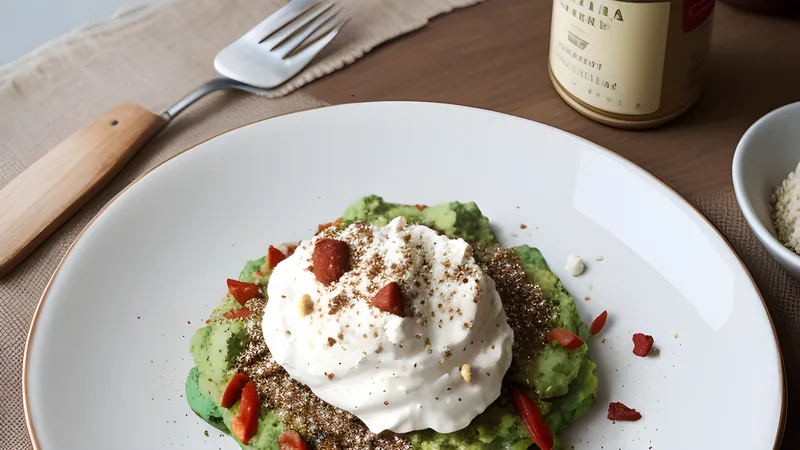
Most people mark the day simply by eating avocados with more attention than usual. Guacamole is the obvious centrepiece, made fresh with lime, salt, onion, coriander and chilli in proportions that home cooks argue about endlessly, but the day extends well past dips: avocado toast, stuffed avocado halves, avocado in salads and smoothies, and the sliced-fan garnish that has become a brunch-menu cliché all get their turn. Restaurants and cafés often run avocado-themed specials or discounts, and grocery chains use the date to promote bulk pricing on the fruit, leaning into a day that already sits inside peak Californian harvest season. Social media plays an outsized role too, with the fruit’s photogenic green flesh and dramatic stone making it one of the more photographed foods to have a dedicated day, generating its own minor cottage industry of avocado-shaped kitchenware and stationery.
World Variations
Outside the United States, avocado appreciation takes shapes formed by local cuisine rather than a shared calendar date. In Mexico, where the fruit has never needed rebranding, it appears constantly in guacamole, tortas and salsas, treated as a staple rather than a delicacy, and simply sliced with salt and lime as an everyday side. Brazilian and Vietnamese cooks, by contrast, often use ripe avocado in sweet contexts, blending it into milkshakes and desserts with condensed milk or sugar, an approach that surprises people used to treating the fruit exclusively as a savoury ingredient. In parts of Southeast Asia and West Africa, where the tree grows well but arrived more recently through colonial-era plantings, avocado is eaten simply, mashed with a little salt or sugar, or added to fruit salads. Peru and Colombia, both major growers, treat the fruit as an everyday side dish, sliced alongside rice, beans and grilled meat rather than dressed up for a special occasion.
Traditions and Symbols
The avocado itself, split open to reveal its buttery green flesh around a disproportionately large stone, is the day’s obvious symbol, and that stone has become something of a folk icon in its own right, suspended in water on toothpicks by amateur gardeners hoping, usually in vain, to grow a tree from a supermarket fruit. The molcajete, the volcanic-stone mortar and pestle used across Mexico to grind guacamole, represents the traditional, unhurried way of preparing the fruit against the blender-quick methods common elsewhere. Green, in general, has become loosely associated with the avocado’s marketing, showing up in branding for everything from avocado-based skincare to the toast itself, and the fruit’s rounded, pear-like silhouette shows up as a recurring motif in food-themed merchandise well beyond the kitchen.
Fun Facts
Botanically, the avocado is a large single-seeded berry, not a vegetable, which makes every bowl of guacamole a fruit dip by strict definition. A mature avocado tree can produce several hundred fruits in a single season once established, and some individual trees have been recorded bearing fruit for well over a century. The 1997 opening of the US market to Mexican avocados took effect gradually, region by region, before the entire country gained access in 2007, a rollout that took a full decade to complete. Avocado oil has a notably high smoke point compared with most culinary oils, which is why it turns up in high-heat cooking despite costing several times more than standard vegetable oil. The word “guacamole” preserves the original Nahuatl compound almost intact, a five-century survival that few other everyday English food words can claim, and it connects directly to the celebration explored on US National Guacamole Day. Anyone tracking the wider arc of Mexican food culture in the United States will also find plenty to chew on around US National Taco Day, which traces a similar path from regional staple to national obsession.
A Closing Reflection
An avocado on a chopping board carries more history than its quiet green flesh suggests: ten thousand years of cultivation, a postman’s grafting accident, a trade ban lifted after decades of negotiation, and a marketing campaign patient enough to rename a fruit and change how an entire country eats. National Avocado Day asks for nothing more elaborate than slicing one open and noticing that all of it is still there.
Cook for it
Read next


