National Fried Rice Day

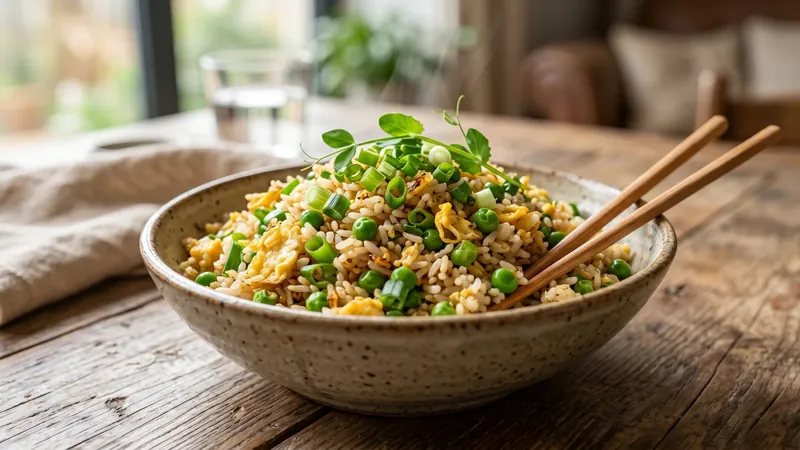
A cook cracks an egg straight into a wok of day-old rice, and within ninety seconds of hard, fast heat a plate of leftovers becomes something worth queuing for. That transformation, repeated in restaurant kitchens and home stoves from Guangzhou to Glasgow, is what 20 September celebrates.
Origin
National Fried Rice Day sits on the calendar published by the US-based National Day Calendar registry, one of thousands of single-food observance days that have proliferated since the early 2000s as restaurant chains and food brands look for marketing hooks tied to a specific date. The registry does not publish a named founder or a filed petition for this particular day, and no restaurant chain has stepped forward to claim credit for its creation. What can be said with confidence is that the day exists to celebrate a dish with a documented history stretching back over a thousand years, which is unusual: most manufactured food days attach themselves to relatively modern products, while fried rice predates the calendar that now marks it by more than a millennium.
History
The clearest early reference to fried rice comes from the Sui dynasty, which ruled China from 581 to 618 CE. Culinary historians point to Yangzhou, a city on the Grand Canal in Jiangsu province, as the source of what later became known as Yangzhou fried rice, a version built on egg, ham, prawns and finely diced vegetables folded through rice that had already been cooked and cooled. The technique of frying cooked rice rather than raw grains was itself a practical solution: rice cooked the previous day loses moisture and firms up, which stops it turning to mush the moment it hits hot oil, so what began as a way to use up leftovers became a defining feature of the dish rather than an accident of it.
Fried rice travelled with Chinese emigration in the nineteenth century, arriving in the United States alongside labourers who came for the California gold rush from 1849 and the transcontinental railroad construction of the 1860s. Cantonese cooks, many from Guangdong province, opened the first Chinese restaurants in San Francisco and later in cities across the American West, adapting dishes for ingredients that were locally available. Fried rice proved especially adaptable because it could absorb whatever protein and vegetables a kitchen had on hand, which made it a fixture of the Chinese-American restaurant menu that spread nationwide through the twentieth century. By the 1940s and 1950s, fried rice had become one of the most ordered dishes in American Chinese restaurants, appearing alongside chop suey and chow mein as a gateway dish for diners unfamiliar with Cantonese cooking.
Parallel traditions developed independently across Asia. Indonesian nasi goreng, flavoured with sweet soy sauce and shrimp paste, has its own centuries-old lineage and was named a national dish by Indonesia’s tourism ministry in 2018. Thailand’s khao pad, built on jasmine rice and fish sauce, and Japan’s chāhan, adapted from Chinese cooking during the Meiji era after 1868, both show the same underlying logic applied to different pantries. The dish’s spread illustrates how a single cooking method, hot wok, cooled rice, quick movement, produced distinct national cuisines rather than one uniform recipe.
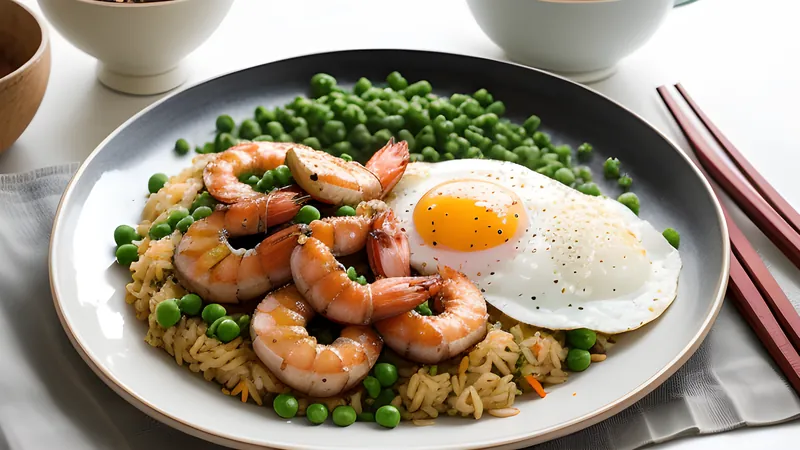
The dish’s arrival in Britain followed a separate but related path. Chinese seamen who settled in Liverpool and London’s Limehouse district from the late nineteenth century opened some of the earliest Chinese eateries in Europe, and fried rice became a menu staple as Chinese restaurants expanded across British high streets through the twentieth century, particularly after further waves of migration from Hong Kong in the 1950s and 1960s. Special fried rice, the British takeaway version loaded with prawns, char siu pork and peas, is largely a local invention rather than a dish found in this exact form in China, illustrating how immigrant cooking adapts to the tastes of a new country while keeping its core technique intact.
Importance
Fried rice occupies an unusual place in food culture because it is simultaneously a delicacy and a practical answer to food waste. Its origin as a way to use rice that would otherwise be thrown out gives it a role in conversations about reducing kitchen waste, a topic that has gained renewed attention as households and restaurants look for ways to stretch ingredients further. The dish also functions as a barometer of a region’s available produce and proteins, since a fried rice recipe from Yunnan looks nothing like one from Singapore or from a diner in Ohio, yet all trace back to the same basic method.
Rice itself feeds more than half the world’s population as a staple crop, according to figures published by the UN Food and Agriculture Organization, which makes any dish built around using it efficiently more than a culinary curiosity. Households in rice-growing regions of Asia developed fried rice partly out of necessity in eras before refrigeration made food storage reliable, when cooking rice fresh for every meal was impractical and reheating it safely required a method that also improved its texture. That history gives the dish a quiet significance beyond its place on a takeaway menu, tying it to centuries of household food management long before the phrase existed.
How It’s Celebrated
Restaurants running National Fried Rice Day promotions typically discount their fried rice dishes or bundle them with other menu items for the day. Home cooks mark the occasion by clearing out a refrigerator’s worth of odds and ends, since fried rice is one of the few dishes where a mismatched collection of leftover vegetables, a spoonful of last night’s protein and rice from two days ago genuinely improves the result rather than compromising it. Food bloggers and social media accounts use the day to share regional variations, from Puerto Rican arroz frito to Filipino sinangag served alongside a fried egg for breakfast. The day sits in a crowded September calendar of food observances, not far from National Cheesesteak Day, another dish built around stretching modest ingredients into something restaurant-worthy.
Some cooks treat the day as an opportunity to compare fried rice against its closest rice-based relative, US National Rice Ball Day, which celebrates a very different way of using leftover or freshly cooked rice, formed and often stuffed rather than fried loose in a pan. Setting the two side by side highlights how many separate food traditions have converged on rice as a base for using up whatever else is on hand.
World Variations
Yangzhou fried rice remains the reference point in much of China, built on a precise ratio of egg, ham and shrimp that separates it from simpler home versions. Indonesia’s nasi goreng, often served with a fried egg on top and a side of prawn crackers, draws its dark colour and sweetness from kecap manis, a thick sweetened soy sauce that gives it a flavour profile distinct from any Chinese version. Japan’s chāhan tends toward a lighter, drier texture, seasoned simply with soy sauce and sometimes finished with a swirl of beaten egg folded through at the very end. In the Philippines, sinangag is made from garlic and day-old rice and forms one part of the traditional silog breakfast, paired with a fried egg and a cured meat. Thai khao pad leans on fish sauce and lime, served with a wedge of lime and sliced cucumber on the side rather than any sauce poured over the top. Caribbean and Latin American versions, shaped by Chinese indentured labourers who arrived in Cuba, Peru and Trinidad in the nineteenth century, produced hybrid dishes like Peru’s arroz chaufa, which blends Cantonese technique with local ingredients such as aji peppers.

Traditions and Symbols
The wok itself carries as much cultural weight as the dish it produces. Its rounded shape allows food to be tossed and moved constantly across a small area of intense heat near the base, a technique called wok hei in Cantonese, literally “wok breath,” which refers to the faint smoky char that a well-seasoned wok imparts to fried rice cooked over a sufficiently hot flame. Restaurant cooks judge a kitchen’s skill partly by whether its fried rice carries that quality, since it cannot be replicated in a shallow pan or a slow-heating electric hob. The use of day-old rice has become such a defining rule that many recipes now instruct cooks to deliberately cook rice ahead of time and refrigerate it uncovered specifically so it dries out enough for frying, turning a once-accidental practice into a fixed technique.
Fun Facts
Yangzhou fried rice recipes from imperial-era China sometimes included dried scallops and sea cucumber, ingredients that marked it as a dish for wealthier households rather than everyday cooking. The Chinese-American fried rice found on most American takeaway menus, heavy on soy sauce and often orange in colour, actually differs significantly from the lighter, less soy-forward versions served in mainland China, where fried rice usually relies more on the natural flavour of the wok and less on sauce. Indonesia’s nasi goreng was named by celebrity chef and broadcaster Anthony Bourdain as one of his favourite dishes worldwide during his travels for television. Pineapple fried rice, a Thai dish served inside a hollowed pineapple half, was popularised partly through its striking presentation at tourist-facing restaurants in Bangkok. The world’s largest recorded serving of fried rice was cooked in the Philippines in 2015, using more than 1,300 kilograms of rice in a single giant wok to mark a local food festival. In parts of northern China, a version made with leftover mantou steamed buns rather than rice, chopped and fried in the same style, exists specifically for households that have bread rather than grain to use up. Restaurant supply data from Chinese-American takeaway associations has repeatedly identified fried rice as one of the two or three most-ordered items across the industry in the United States, alongside sesame chicken and General Tso’s chicken, despite the fact that fried rice rarely appears as a headline dish on any menu.
A Closing Reflection
A dish invented to solve the practical problem of leftover rice now anchors entire regional cuisines and fills takeaway menus on every continent. What began in a Sui dynasty kitchen along the Grand Canal, worked out through trial rather than design, still shapes how millions of people cook dinner from whatever happens to be in the fridge, which may be the clearest evidence of a good idea’s staying power.
Cook for it
Read next


